
Between August and December 2026, five grant writing residents at CLIC will prepare postdoctoral fellowship applications for the Flemish Research Foundation (FWO) and/or the Marie Skłodowska-Curie Actions (MSCA), supported by the broad and diverse expertise available at CLIC. We welcome them as grant writing residents and look forward to seeing their projects develop.
Ruth Alison Clemens
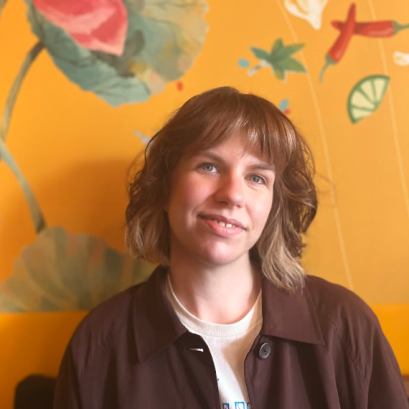
Ruth Alison Clemens is a research fellow of modernism, media, literature, and heritage at Leiden University Centre for the Arts in Society (LUCAS). She recently completed a postdoctoral research fellowship on the weird techno-cultural afterlives of the player-piano, funded by the Dutch Ministry of Culture. Her work has been published in Comparative Critical Studies, Modernist Cultures, and Feminist Modernist Studies, and she has contributed to the books Deleuze and Guattari and Fascism, More Posthuman Glossary, and Flann O’Brien and the Nonhuman, among others. She is the recipient of grants from the Leids Universiteits Fonds and the Stichting Elise Mathilde Fonds for her research on contemporary modernism and politics, which she is looking forward to expanding at CLIC. Ruth explores creative-critical research methods in her research, and she has led creative workshops at the Utrecht University Posthuman Summer School, the Royal Academy of Art (KABK), West Den Haag, and other independent cultural organisations in the Netherlands and elsewhere. For this work, she was awarded the 2026 LUCAS Public Engagement Prize.
Ariane Gros
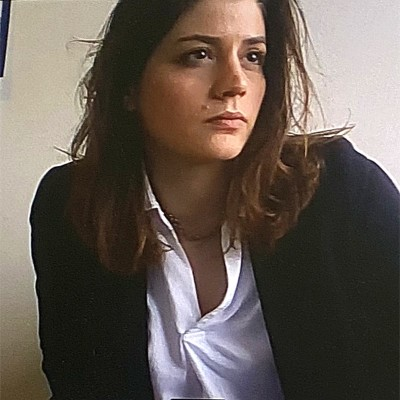
Ariane Gros is a researcher in performance and media studies, with an expertise on cultural history and postcolonial heritage. Her doctoral thesis, completed jointly between the Universities of Cologne and Amsterdam (awarded summa cum laude, forthcoming with J.B. Metzler), offers the first history of the clown to fully account for its colonial dimension and contemporary legacy. Drawn to international relations, she has interned as a speechwriter in the Cabinet of the Director-General of UNESCO and serves on the strategic board of FAB for Performance Studies international (PSi), A dramaturg by training, she has collaborated for over five years with Dutch artist Merel Smitt on participatory performance devices, a methodology documented in a forthcoming volume with HumDrum Press. She is currently developing an MSCA Postdoctoral Fellowship application on the role of performance in colonial propaganda and its museal afterlives across France, Belgium, and the Netherlands.
Stephanie Ng

Stephanie Ng holds a doctorate in Comparative Literature from University College London. Her thesis read contemporary women's writing to theorize compromise as a neoliberal technology, a liberal tenet, a gendered imperative, and an aesthetic practice. As a Visiting Fellow at the School of Advanced Study, she explored the ethics of authorship and assimilation in migrant mother-daughter dyads. Articles derived from her doctoral and post-doctoral years are forthcoming in the Journal of Romance Studies and Comparative Critical Studies. Stephanie extends her background in neuroscience and interest in affective belonging and political imaginaries to a transdisciplinary monograph. Co-authored with Assistant Professor of Genetics Kim Zayhowski, The Genomic Social Contract (University of California Press) asks what people concede in upholding institutions that promise to know them. At CLIC, Stephanie will develop a new project that maps implication across post-#MeToo women’s writing, film, and television. What happens when women feel they can no longer claim the status of innocent victim or external critic but must instead reckon with their own entanglement in the heteropatriarchal status quo? What happens when public doubt about women’s experiences is internalized as self-suspicion, compounding a pervasive sense of self-reproach? The project tracks how the implicated narrator avows her own moral pliancy and misrecognized culpability in gendered violence as a means of negotiating credibility and institutional legibility.
Thalia Ostendorf
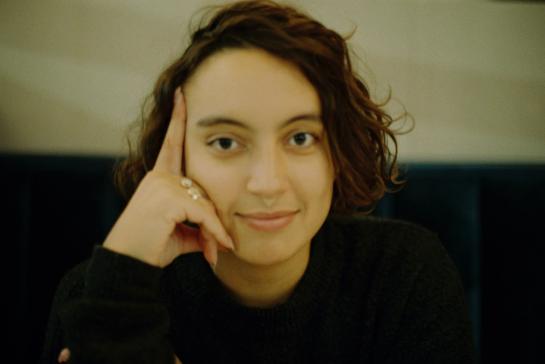
Dr. Thalia Ostendorf is a lecturer in Caribbean literature at the University of Amsterdam. She holds a BA and MA in Comparative Literary Studies from Utrecht University, and attained her doctorate from the University of St. Andrews, Scotland. In her last postdoc project Plantation Kinships (University of Amsterdam), she researched the nature of kin relations between people of the African diaspora in Suriname and the Netherlands whose ancestors were all enslaved at the same plantation. She did so through the analysis of a corpus of Dutch-language Surinamese literature, specifically by Edgar Cairo (1948-2000), and fieldwork in Suriname. Currently she is working on a biography of Surinamese author Bea Vianen (1935-2019). She also writes articles and short stories, and is one of the co-founders of feminist publishing house Chaos.
Marcin Pietruszewski

Marcin Pietruszewski is a composer and researcher working with computer programs for sound synthesis. His practice joins composition, software development and the media archaeology of computer music: reading source code, documentation and archives alongside the sounding results of the programs they describe. He is the author of the open-source New Pulsar Generator (nuPG) and nUPIC, and has developed synthesis programs on commission for artists including Florian Hecker, Matmos and Mouse on Mars. He holds a PhD in Creative Music Practice from the University of Edinburgh and is Artistic Research Associate at Bauhaus-Universität Weimar. He was previously Leverhulme Research Fellow at Northumbria University, with research residencies at ZKM Karlsruhe, ICST Zurich, CCRMA Stanford and CREATE at UC Santa Barbara. As a CLIC Grant Writing Resident in 2026 he is preparing a Marie Skłodowska-Curie Postdoctoral Fellowship proposal, hosted by CLIC, on the history and practice of sound synthesis.
Photo Credit: Kamila Łozinska/the Wire