
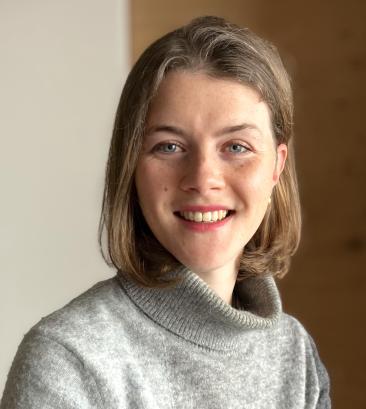
CLIC nodigt jullie graag uit voor de eerstvolgende WOLEC-sessie die plaatsvindt op donderdag 1 oktober van 12:00 tot ten laatste 13:30 in C503. Spreker Maxime Honinx (VUB) zal een lezing geven met als titel: “Researching Nineteenth-century Women Travel Writers, and the Process as (the) Material”.
Maxime Honinx behaalde een Bachelor in Onderwijs: Engels en Geschiedenis aan UCLL Diepenbeek (2018). Tijdens haar lerarenopleiding spendeerde ze een semester in het buitenland, aan de University of Worcester, als onderdeel van het Erasmus uitwisselingsprogramma. In 2019 rondde Maxime het schakelprogramma in Engelse Taal-en Letterkunde af aan de Universiteit Antwerpen. Ze studeerde verder aan Durham University, waar ze – met onderscheiding – een Master in Engelse Literatuurwetenschappen behaalde (2020). In haar masterthesis, “Casting a Cold Eye: The Development of the Elegiac Strain in William Butler Yeats”, gaf ze een diachrone analyse van de Yeatsiaanse elegie. Na haar studies werkte ze als leerkracht Engels in het Brusselse middelbare onderwijs. Vandaag de dag is Maxime doctoraatsonderzoeker aan de VUB, waar ze, onder begeleiding van Professor Eva Ulrike Pirker, werkt aan een project rond meritocratische narratieven in negentiende-eeuwse ‘travelogues’ door vrouwen.
De voertaal is het Engels. Een broodjeslunch wordt voorzien. We vragen u om uw aanwezigheid ten laatste tegen 25 september via deze link te bevestigen. Voor meer informatie over WOLEC, klik hier.
Tot dan!
CLIC is excited to invite you to the next WOLEC-session, taking place on Thursday 1 October from 12:00 till 13:30 in room C503. Speaker Maxime Honinx (VUB) will give a lecture titled: “Researching Nineteenth-century Women Travel Writers, and the Process as (the) Material”.
Maxime Honinx received a Bachelor’s Degree in Education: English and History from UCLL Diepenbeek (2018). While studying for her teaching degree, she spent a semester abroad at the University of Worcester through the Erasmus exchange programme. In 2019, Maxime completed the Bridging Programme in English Literature and Linguistics from Universiteit Antwerpen. She went on to study at Durham University and was awarded an MA with Distinction in English Literary Studies (2020). Her master’s thesis, ‘Casting a Cold Eye: The Development of the Elegiac Strain in William Butler Yeats’ provided a diachronic analysis of the Yeatsian elegy. After graduating, she taught English at a secondary school in Brussels. Maxime is currently a PhD candidate at VUB under the supervision of Professor Eva Ulrike Pirker, working on meritocratic narratives in nineteenth-century women's travelogues.
The lecture will be held in English. A sandwich lunch will be provided. We ask you to confirm your presence via this link by 25 September. For more information about WOLEC, click here.
We hope to see you there!
Abstract
Often, as PhD researchers, defining the "how" is more challenging than defining the "what", and although the latter is our bull's-eye most of the time, making the former a more accessible topic of transparent discussion is all the more important. My doctoral research project, titled "The merits of translocation: Female travelogues between nineteenth-century imperial and peripheral narratives", has now reached the end of its second year, marking the middle point of its planned four-year trajectory. In this research, I seek to uncover how the writers of my corpus approach concepts of merit and achievement in their travelogues, all written and published in English in the second half of the nineteenth century.
At this point in time, then, the opportunity arises for a reflection à laJanus on the process of my doctoral work so far. How have I attempted to find an answer to my main question, and to what hypotheses has this led? How have the theoretical and methodological frameworks, such as life writing theory and cultural translation, informed the approach to and the selection of the case studies and vice versa? Which conclusions on my process, specifically, can I draw at this point, and which adjustments will I make? What has the importance of archival materials been, what can it mean in the near future, and what happens if you pull a loose string?
In this lecture, I will thus be taking stock of my research project in general, in tandem with two specific case studies, namely Lucy Atkinson and Isabella Frances Romer. By doing so, I aim to shed a light on the course of the research that has led to my findings on these mid-nineteenth-century writers, pitfalls and windfalls included, and where it will likely take me. The lecture then also hopes to invite attendees, in particular fellow early-career researchers, to think about their approaches to process, including trials and errors, and to open the floor to conversation.