
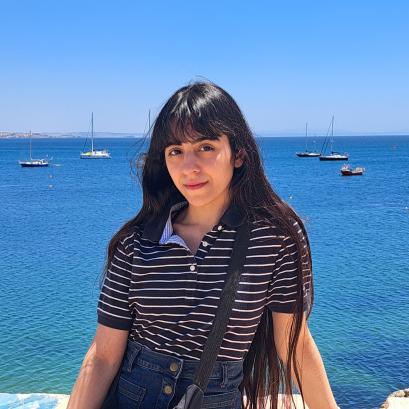
CLIC nodigt jullie graag uit voor de eerstvolgende WOLEC-sessie die plaatsvindt op donderdag 5 februari van 12:00 tot ten laatste 13:30 in C3.06 (Vergaderzaal PE). Spreker Tem Mirkazemiyan (VUB) zal een lezing geven met als titel: "Will to Allegory in Times of Crisis: The Resurgence of Absurdist Theatre in Iran".
Tem Mirkazemiyan is een doctoraatsstudent aan de Vrije Universiteit Brussel. Ze behaalde een bachelor in Engelse taal- en letterkunde aan de Universiteit van Teheran en een master in Westerse literatuur aan KU Leuven, waar ze de VLUHR Master Mind Scholarship ontving. Haar onderzoek richt zich op adaptaties van absurdistisch theater in Iran en focust zich op hoe deze herwerkte stukken via allegorie omgaan met socio-politieke complexiteiten. Via de analyse van belangrijke absurdistische adaptaties verkent ze de wisselwerking tussen formele technieken en absurdistische esthetiek, en laat ze zien hoe allegorie fungeert als zowel een middel voor kritiek als een bron van hoop in de context van censuur en veranderende culturele identiteiten.
De voertaal is het Engels. Een broodjeslunch wordt voorzien. We vragen u om uw aanwezigheid ten laatste tegen 2 februari via deze link te bevestigen. Voor meer informatie over WOLEC, klik hier.
Tot dan!
*****
CLIC is excited to invite you to the next WOLEC session, taking place on Thursday 5 February from 12:00 till 13:30 in room C3.06. Tem Mirkazemiyan (VUB) will give a lecture titled: "Will to Allegory in Times of Crisis: The Resurgence of Absurdist Theatre in Iran".
Tem Mirkazemiyan is a doctoral candidate at Vrije Universiteit Brussel. She holds a BA in English Language and Literature from the University of Tehran and an MA in Western Literature from KU Leuven, where she received the VLUHR Master Mind Scholarship. Her research examines absurdist theatre adaptations in Iran, focusing on how these reinterpreted works navigate socio-political complexities through allegory. By analysing key absurdist adaptations, she explores the interplay between formal techniques and absurdist aesthetics, revealing how allegory functions as both a vehicle for critique and a source of hope in the context of censorship and evolving cultural identities.
The lecture will be held in English. A sandwich lunch will be provided. We ask you to confirm your presence via this link by 2 February. For more information about WOLEC, click here.
We hope to see you there!
Abstract
Despite its decline in the West, absurdist theatre has found a striking afterlife in Iran. Emerging in the 1960s, absurdist adaptations faded from the stage during times of marked ideology such as the Islamic Revolution of 1979 and the subsequent eight-year Iran–Iraq War, only to resurface at the turn of the millennium. This resurgence occurred amid a growing sense of something weary: the descent of what was once revolutionary. In this talk, I trace how the fragmentation of post-revolutionary hope does not do away with hope entirely but transforms it into a mode that is neither optimistic nor pessimistic, a disillusioned hope that understands the future as “a potentiality forever to come.” Focusing on contemporary Iranian adaptations of Jean Genet, including a staging of The Blacks shortly after the 1999 student protests in Tehran and more recent adaptations of The Maids, I will explore a “will to allegory” that becomes imminent in these conditions of crisis. This tendency towards allegorical multiplicity functions both as a strategy to subvert censorship, and as a formal means of gesturing toward the potential of uncertainty amid the collapse of totalizing narratives. Seen through this lens, absurdism emerges not merely as a representation of decay, but as an alternative that cultivates hope through despair.