
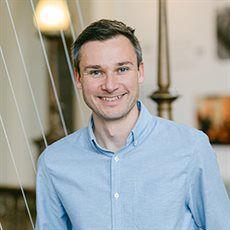
CLIC nodigt jullie graag uit voor de eerstvolgende WOLEC-sessie die plaatsvindt op dinsdag 21 april van 12:00 tot ten laatste 13:30 in 5C.03. Spreker Chris Mourant (University of Birmingham) zal een lezing geven met als titel: "Revised Passages: Editing E. M. Forster’s A Passage to India".
Dr. Chris Mourant is docent Engelse literatuur uit de vroege twintigste eeuw en hoofd van de afdeling Internationale Betrokkenheid van de School of English, Drama and Creative Studies aan de Universiteit van Birmingham. Zijn onderzoek richt zich op drie brede thema's die vaak in combinatie voorkomen: drukcultuur en mediageschiedenis; imperium en koloniale moderniteit; en de transnationale, mondiale verbeeldingskracht van modernistische literatuur. Chris heeft onder andere de monografie Katherine Mansfield and Periodical Culture (2019) en de essaybundel The Modern Short Story and Magazine Culture, 1880–1950 (2021) gepubliceerd. Momenteel redigeert hij een nieuwe wetenschappelijke editie van A Passage to India voor The Cambridge Edition of the Fiction of E. M. Forster. Eerder was Chris lid van het uitvoerend comité van de British Association for Modernist Studies, co-directeur van het Centre for Modernist Cultures aan de Universiteit van Birmingham en co-redacteur van het tijdschrift Modernist Cultures.
De voertaal is het Engels. Een broodjeslunch wordt voorzien. We vragen u om uw aanwezigheid ten laatste tegen 16 april via deze link te bevestigen. Voor meer informatie over WOLEC, klik hier.
Tot dan!
*****
CLIC is excited to invite you to the next WOLEC session, taking place on Tuesday 21 April from 12:00 till 13:30 in room 5C.03. Chris Mourant (University of Birmingham) will give a lecture titled: "Revised Passages: Editing E. M. Forster’s A Passage to India".
Dr Chris Mourant is Lecturer in Early Twentieth-Century English Literature and Head of Global Engagement for the School of English, Drama and Creative Studies at the University of Birmingham. His research falls into three broad themes which often appear in combination: print culture and media history; empire and colonial modernity; and the transnational, global imaginaries of modernist writing. Chris’s book publications include the monograph Katherine Mansfield and Periodical Culture (2019) and the edited volume of essays The Modern Short Story and Magazine Culture, 1880–1950 (2021), and he is now editing a new scholarly edition of A Passage to India for The Cambridge Edition of the Fiction of E. M. Forster. Previously, Chris has served as executive committee member of the British Association for Modernist Studies, co-director of the Centre for Modernist Cultures at the University of Birmingham, and co-editor of the journal Modernist Cultures.
The lecture will be held in English. A sandwich lunch will be provided. We ask you to confirm your presence via this link by 16 April. For more information about WOLEC, click here.
We hope to see you there!
Abstract
Why revisit A Passage to India a century after its first publication? This presentation explores the need for a new scholarly edition of E. M. Forster’s final novel, widely recognised as his masterpiece. The forthcoming Cambridge Edition of the Fiction of E. M. Forster will offer a clearer, more reliable, and more reader‑friendly text than the long‑established Abinger edition. First published in 1978 across two volumes and edited by Oliver Stallybrass, the Abinger edition has quietly shaped how generations of readers have understood Forster’s work. Yet its editorial principles – and the many small, often opaque decisions made in its construction – have subtly altered the novel’s meaning in ways that depart from the text readers first encountered in 1924.
Drawing on my experience preparing the Cambridge edition of A Passage to India, I present examples of how these accumulated editorial choices influence interpretation, even at the most granular level of individual letters. I also reflect on how engaging with the manuscripts of the novel helps shed new light on its compositional history and clarify Forster’s own intentions and influences, offering evidence that further sharpens our understanding of the novel. Just as a pair of field‑glasses can transform a snake into a stick, shifting our angle of vision on the text allows us to see it anew. This talk demonstrates how the Cambridge edition restores that original clarity, inviting readers to re‑engage with Forster’s novel with fresh precision and insight.